
Oliver (*not his real name) had recently moved into a new property after a period of upheaval that had left him with very little to take forward. On paper, he was ‘housed’. In reality, he was starting again from a place most of us never see.
There were no familiar belongings to soften the edges of that transition. No small comforts waiting for him at the end of the day. The basics we rely on without thinking simply weren’t there.
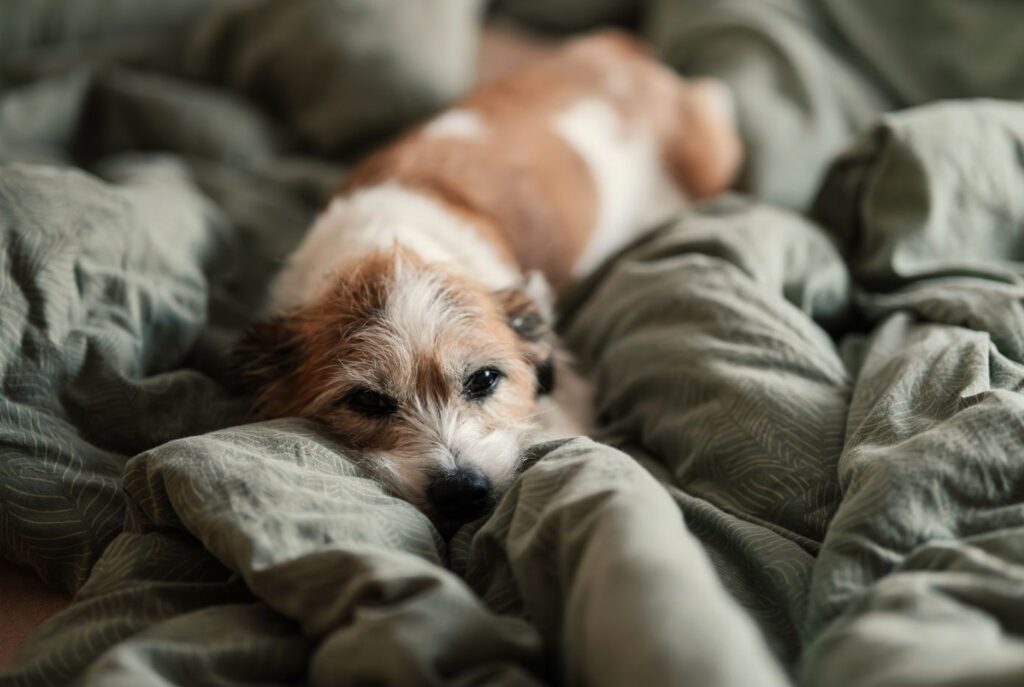
He’d also been reunited with his dog, an emotional support animal that had been out of his care while his situation was uncertain. The reunion meant everything to Oliver, but it came with its own challenges. The dog came back no bed, no blanket, no bowls.
Before the Foundation stepped in, Oliver had a kettle and a toaster. His one hot meal that weekend was a tin of beans heated in the kettle, alongside two boiled eggs (also done in the kettle). He made toast to go with it. Ingenious, maybe, but no one should have to live like that.
This is where our work doesn’t follow a standard template. There isn’t a pre-packed ‘solution’ we reach for. We build around the person, the situation, the small details that make the difference between coping and not coping. For Oliver, that meant pulling together what we could, quickly. A microwave so he could heat a proper meal without having to improvise. Bedding and towels that were clean. Clothes that fitted. Toiletries.
And for his dog, a bed.
When Oliver saw it, he put it next to his own bed. He was close to tears.
We saw, immediately, the difference something relatively simple made. Not just in practical terms, but in how someone feels about the space they’re in. Having four walls and a roof is one thing. Living in a place that feels like it belongs to you, even in a small way, is something else entirely. When people move on from crisis, they don’t leave it neatly behind them. They carry it with them, into whatever comes next. An empty room, or a space that feels temporary and bare, can keep that sense of instability very close.
Comfort isn’t a luxury in that moment; it’s becomes part of someone’s recovery.
With this support, Oliver began to take further steps forward, like joining a local food pantry. What we provided didn’t replace that wider support. It made it easier for him to access and use it.
That’s the thinking behind the Foundation’s ‘Our House’ campaign. It recognises that when someone is starting over, the gap between ‘housed’ and ‘home’ is much bigger than it looks from the outside.
We see versions of Oliver’s story every week. Different names, different circumstances, but the same underlying need for something that feels stable when everything else is uncertain.
When people support the Foundation, whether through donations or funding, this is where it goes. Not into a generic pot, but into bespoke care packages for scenarios like this.
Oliver didn’t need everything. He just needed the right things, at the right time.
This is the Foundation of our latest campaign: Our House. It aims to raise money in the image of tangible donations—microwaves, kettles, toaster, toiletries. Items that go into our care packages week in, week out.
If you’d like to donate to Our House, you’d be helping more people like Oliver.
